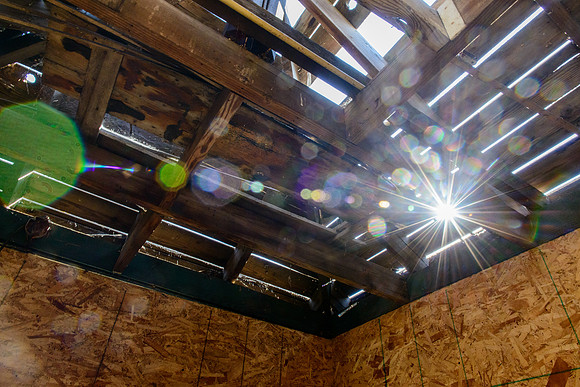
211•366 • 29 July 2016 • Guard Tower
On assignment for a documentary film about the Tulelake Segregation Center during WW II. We were granted access to some stuff the general public isn't privy to. This is the inside of one of the Guard Towers that will eventually be restored.
"The Tule Lake Unit of the World War II Valor in the Pacific National Monument[4] in Modoc and Siskiyou counties in California, consists primarily of the site of the Tule Lake War Relocation Center, one of ten concentration camps constructed in 1942 by the United States government to incarcerate Japanese Americans forcibly removed from their homes on the West Coast. They totaled nearly 120,000 people, two-thirds of whom were United States citizens.
After a period of use, this facility was renamed the Tule Lake Segregation Center in 1943, and used as a maximum security, segregation camp to separate and hold those prisoners considered disloyal or disruptive to the other camps' operations. That year inmates from other camps were sent here to segregate them from the general population. Draft resisters and others who protested the injustices of the camps, including by their answers on the loyalty questionnaire, were sent here. At its peak, Tule Lake Segregation Center (with 18,700 inmates) was the largest of the ten camps and most controversial.[3]
After the war it became a holding area for Japanese Americans slated for deportation or expatriation to Japan, including some who had renounced US citizenship under duress. Many joined a class action suit because of civil rights abuses; many gained the chance to stay in the United States through court hearings but did not regain their citizenship due to opposition by the Department of Justice. The camp was not closed until March 1946, months after the end of the war. Twenty years later, members of the class action suit gained restoration of US citizenship through court rulings.
California later designated this Tule Lake camp site as a California Historical Landmark[2] and in 2006, it wa